
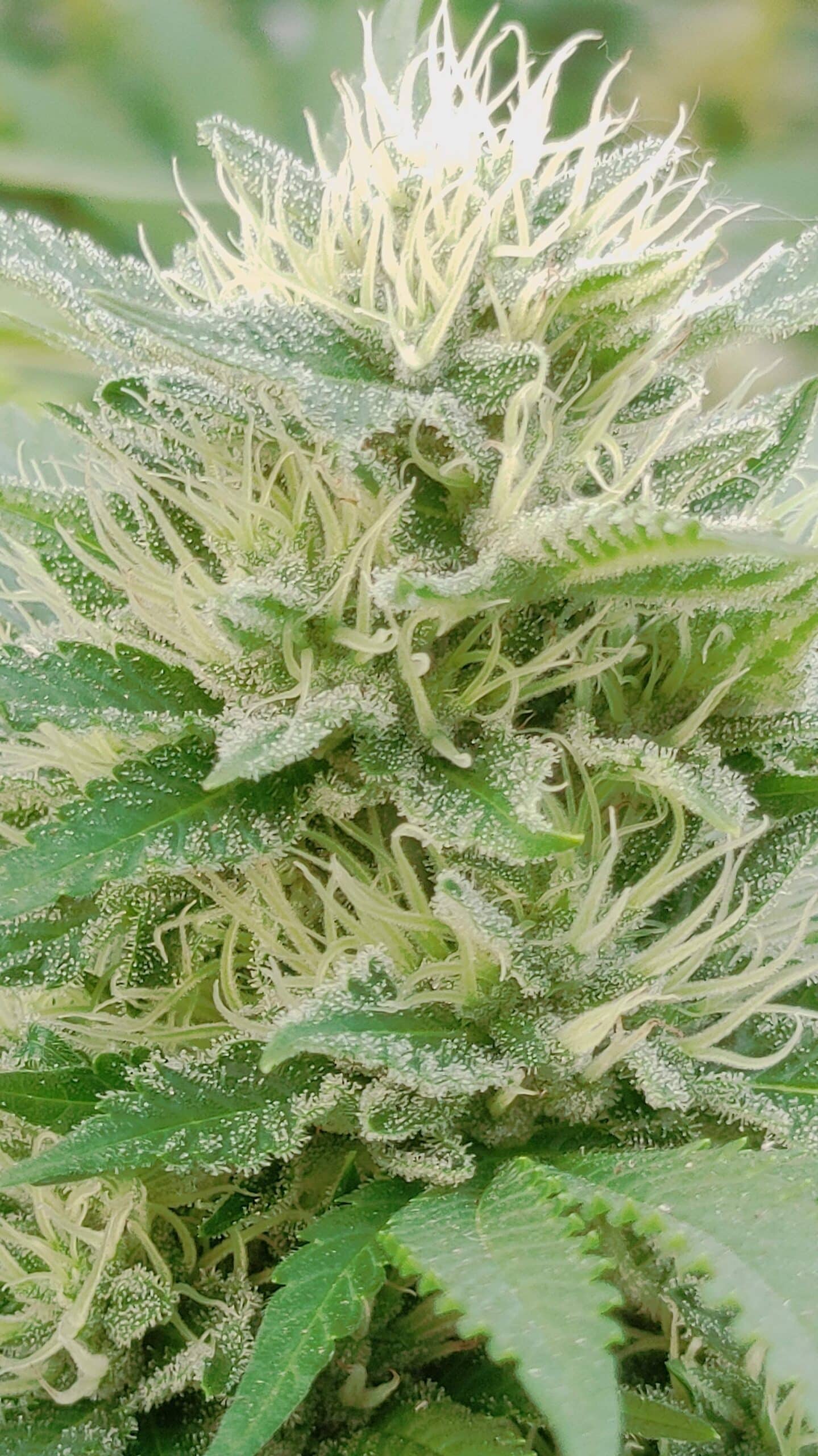
Genetics:
White Widow is one of the most legendary cannabis strains in history and remains a cornerstone of modern hybrid breeding. First developed in the Netherlands in the 1990s, this iconic cultivar combines powerful old-world genetics with balanced hybrid characteristics, earning its place as one of the most recognized strains worldwide.
The White Widow lineage is widely believed to be a cross between Brazilian Sativa and a South Indian Indica. The Brazilian sativa influence contributes tropical landrace heritage, vigor, and complex sativa characteristics, while the South Indian indica side adds structure, resin production, and traditional indica traits.
The South Indian Indica genetics are believed to come from the Kerala region of India, an area known for producing resin-rich cannabis varieties traditionally used in hash production. These genetics played an important role in developing White Widow’s famous resin coverage and breeding value.
The Brazilian Sativa side contributes equatorial landrace genetics from South America. These heirloom varieties have been valued by breeders for their diversity, unique expressions, and their role in creating many classic sativa-dominant hybrids.
Together, these genetics create White Widow, a cultivar that represents the meeting of tropical sativa heritage and classic resin-producing indica genetics. Its lineage includes influential genetics such as Brazilian Sativa and South Indian Indica landrace varieties.
With roots in authentic landrace cannabis populations, White Widow remains one of the most influential strains ever created. It is a standout choice for collectors and enthusiasts who appreciate historic genetics, legendary breeding achievements, and the foundational cultivars that helped shape modern cannabis.
Terpene Profiles:
White Widow terpene profile is a classic blend of fresh pine, citrus, earthy herbs, and warm spice. This legendary cultivar is often associated with uplifting, creative effects balanced by comfortable physical relaxation.
- Myrcene is the dominant terpene, contributing earthy, herbal notes and is often linked to relaxing, calming effects.
- Caryophyllene contributes spicy, peppery notes and is unique because it can interact with the body’s endocannabinoid system.
- Pinene adds a crisp pine aroma and is associated with promoting alertness and mental clarity
- Limonene provides bright citrus aromas and is commonly associated with an uplifting, positive mood.
- Linalool contributes delicate floral, lavender, and lightly sweet aromas and is commonly associated with calming, soothing effects and potential stress-relieving properties.
- Humulene contributes earthy, woody, and subtly spicy aromas with herbal, hoppy notes and is commonly associated with anti-inflammatory properties and potential appetite-suppressing effects.


