
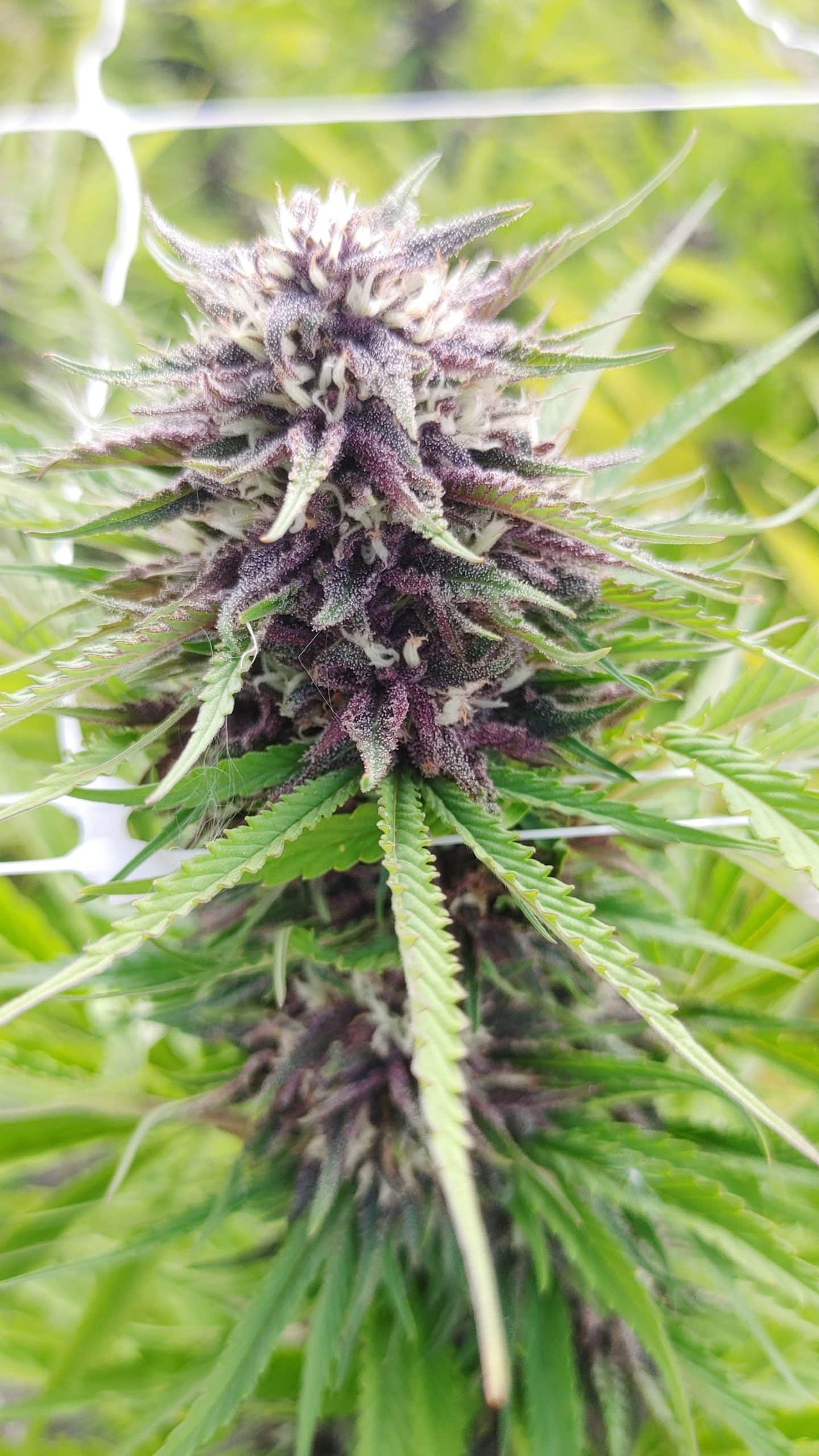
Genetics:
Forbidden Fruit is a flavorful indica-dominant hybrid with a unique genetic background that combines two legendary cannabis families: Cherry Pie and Tangie. This pairing brings together the sweet, fruity characteristics of classic dessert strains with the bright citrus influence of Tangie, creating a cultivar with a memorable lineage and strong appeal among collectors and cannabis enthusiasts.
The Cherry Pie side of the family tree comes from a cross of Granddaddy Purple and Durban Poison. Granddaddy Purple contributes its famous purple lineage and deep indica influence, while Durban Poison adds a classic African sativa heritage that has helped shape many modern hybrids. Together, these genetics create a foundation known for rich flavors, colorful traits, and strong breeding potential.
The other parent, Tangie, is a citrus-forward hybrid created from California Orange and Tangerine Dream. California Orange brings classic old-school citrus genetics, while Tangerine Dream contributes influences from G13, Neville’s A5 Haze, and other Haze-related lines, adding depth and complexity to Tangie’s family tree.
Together, these genetics create Forbidden Fruit, a strain that blends the best of the Cherry Pie, Purple, Haze, and citrus families. Its lineage includes influential genetics such as Granddaddy Purple, Durban Poison, California Orange, Tangerine Dream, G13, and Haze. With a family tree built from some of cannabis’ most recognizable varieties, Forbidden Fruit represents the creativity of modern breeding and remains a favorite among collectors who appreciate unique flavors and heritage genetics.
Terpene Profile:
Forbidden Fruit terpene profile is a decadent blend of ripe cherries, tropical citrus, sweet berries, and earthy pine. This rich, fruit-forward combination is often associated with deeply relaxing body effects, a peaceful state of mind, and a long-lasting sense of calm.
- Myrcene is the dominant terpene, contributing earthy, herbal notes and is often linked to relaxing, calming effects.
- Limonene provides bright citrus aromas that enhance the strain’s sweet tropical fruit profile and is commonly associated with an uplifting, positive mood.
- Caryophyllene contributes spicy, peppery notes and is unique because it can interact with the body’s endocannabinoid system, making it a popular terpene for those interested in overall wellness.
- Pinene contributes fresh pine, cedar, and herbal aromas and is commonly associated with alertness, mental clarity, and focus while also being studied for its potential anti-inflammatory and bronchodilator properties.
- Humulene contributes earthy, woody, and subtly spicy aromas with herbal, hoppy notes and is commonly associated with anti-inflammatory properties and potential appetite-suppressing effects.
- Linalool contributes delicate floral, lavender, and lightly sweet aromas and is commonly associated with calming, soothing effects and potential stress-relieving properties.