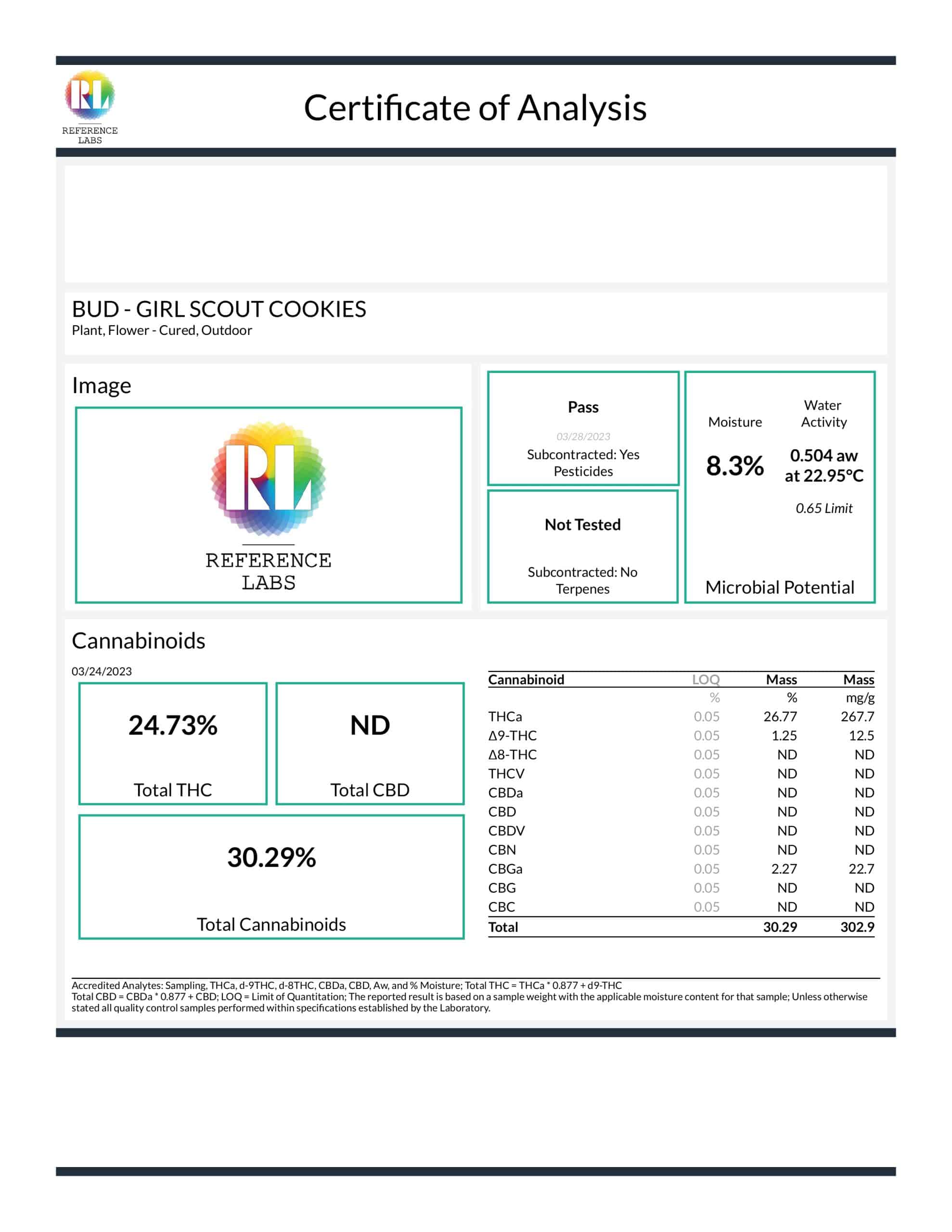
Genetics:
GSC (Girl Scout Cookies) is one of the most influential cannabis hybrids of the modern era. Known as the foundation of the Cookie family, GSC changed the direction of cannabis breeding by combining two legendary lineages: OG Kush and Durban Poison. This iconic pairing created a genetic legacy that continues to shape many of today’s most popular strains.
The OG Kush side of the family tree brings classic Kush heritage and is believed to have connections to Chemdawg, Lemon Thai, and Hindu Kush genetics. These influences helped establish OG Kush as one of the most important breeding strains in cannabis history, passing along its signature earthy, citrus, and fuel-like characteristics to countless modern hybrids.
The other parent, Durban Poison, is a pure South African landrace sativa known for its unique heritage and importance in cannabis preservation. As one of the foundational landrace varieties, Durban Poison has been used by breeders for generations to add stability, vigor, and distinctive sativa traits to hybrid genetics.
Together, these two powerhouse parents created Girl Scout Cookies, a strain that became the foundation for an entire generation of cannabis breeding. Its family tree includes influential genetics such as OG Kush, Chemdawg, Hindu Kush, Lemon Thai, and Durban Poison.
Through its offspring, GSC has helped create some of the most recognized modern cultivars, including Gelato, Wedding Cake, Runtz, Animal Cookies, Cookies & Cream, and many other elite hybrids. With a lineage that connects classic Kush genetics with landrace heritage, GSC remains a true cornerstone of modern cannabis genetics and a favorite among collectors, breeders, and cannabis enthusiasts worldwide.
Terps:
The most common terpenes found in “GSC” include:
1. Caryophyllene: This terpene has a spicy, peppery, and woody aroma. Caryophyllene is also found in black pepper and cloves. It’s known for its potential anti-inflammatory and analgesic properties.
2. Limonene: Limonene has a citrusy aroma reminiscent of lemons and oranges. It is believed to have mood-enhancing and stress-relieving properties and is also found in various citrus fruits.
3. Linalool: Linalool has a floral scent with hints of lavender. It’s known for its calming and sedative effects and is also present in lavender flowers.
4. Humulene: Humulene has an earthy and woody aroma. It has potential anti-inflammatory properties.
5. Myrcene: Myrcene is one of the most common terpenes in cannabis and is found in various other plants. It has a herbal and slightly fruity aroma and is known for its relaxing effects.
6. Pinene: As the name suggests, pinene has a pine-like aroma and is also found in pine trees. It is believed to have potential bronchodilator and anti-inflammatory properties.
7. Bisabolol: Bisabolol has a floral and sweet aroma and is present in chamomile. It’s known for its potential anti-irritation and anti-inflammatory effects.