
Sale!

Forbidden Fruit

Forbidden Fruit Cannabis Seed Traits:
Strain: 
Forbidden Fruit
Strain Type: Indica-dominant hybrid
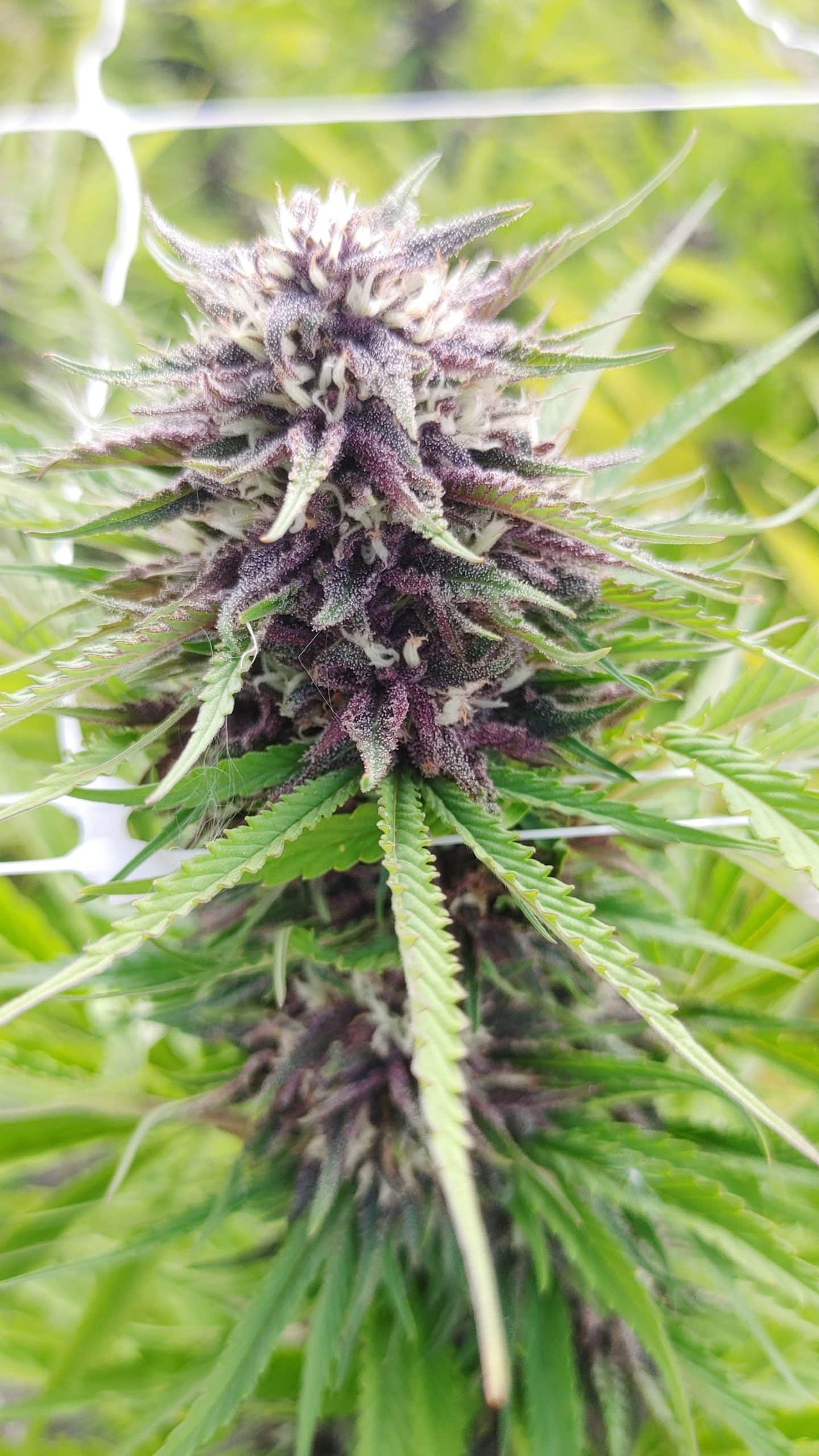
Phenotype: Forbidden Fruit typically develops into a medium-height, vigorous plant with sturdy branching and dense flower formation. Buds are chunky and heavily coated in trichomes, often displaying deep green coloration with dramatic purple and magenta hues accented by bright orange pistils. Forbidden Fruit is prized for its vibrant purple coloration, abundant trichome production, and exceptionally flavorful terpene profile.
Seed Type: Regular
Flowering Time:  Approximately 8–9 weeks indoors, with outdoor harvests generally finishing in late September to early October, depending on climate and phenotype expression.
Genetic Lineage: Cherry Pie and Tangie
Aroma/ flavor: Ripe cherries, tropical fruit, citrus zest, and sweet berries layered with notes of pine, earth, and subtle floral sweetness.
Terp Profile: Myrcene, Limonene, B-Caryophyllene
Secondary Terpenes: Linalool, Pinene, Humulene
Medicinal Uses:  *Individual experiences and responses may vary.
It may help ease stress, anxiety, and insomnia while promoting relaxation and restful sleep. Its soothing body effects may also provide temporary relief from chronic pain, muscle tension, everyday aches, improve mood and increase appetite.
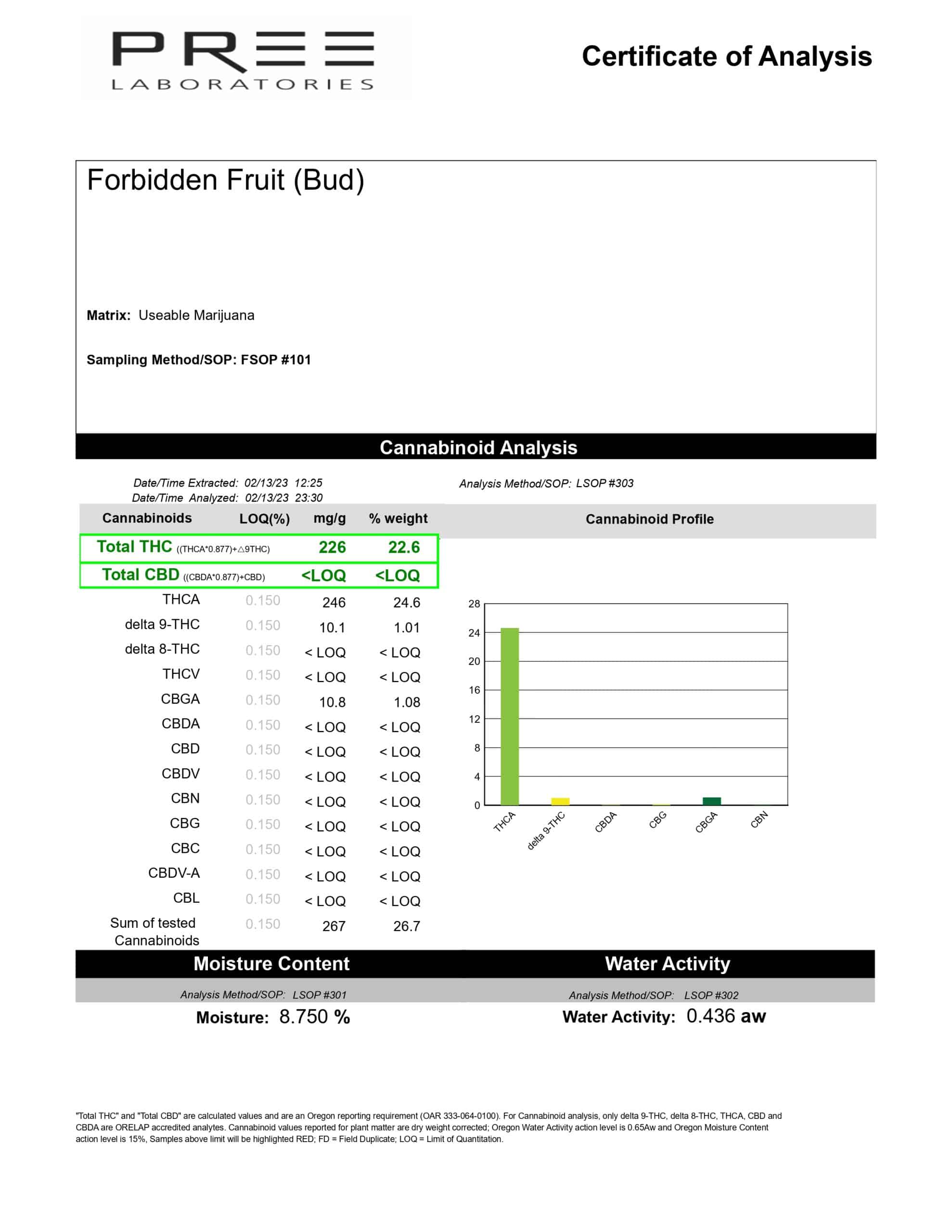
Our Test Results: 22.6% THC, 1.06% CBGA

- +

Genetics:

Forbidden Fruit is a flavorful indica-dominant hybrid with a unique genetic background that combines two legendary cannabis families: Cherry Pie and Tangie. This pairing brings together the sweet, fruity characteristics of classic dessert strains with the bright citrus influence of Tangie, creating a cultivar with a memorable lineage and strong appeal among collectors and cannabis enthusiasts.

The Cherry Pie side of the family tree comes from a cross of Granddaddy Purple and Durban Poison. Granddaddy Purple contributes its famous purple lineage and deep indica influence, while Durban Poison adds a classic African sativa heritage that has helped shape many modern hybrids. Together, these genetics create a foundation known for rich flavors, colorful traits, and strong breeding potential.

The other parent, Tangie, is a citrus-forward hybrid created from California Orange and Tangerine Dream. California Orange brings classic old-school citrus genetics, while Tangerine Dream contributes influences from G13, Neville’s A5 Haze, and other Haze-related lines, adding depth and complexity to Tangie’s family tree.

Together, these genetics create Forbidden Fruit, a strain that blends the best of the Cherry Pie, Purple, Haze, and citrus families. Its lineage includes influential genetics such as Granddaddy Purple, Durban Poison, California Orange, Tangerine Dream, G13, and Haze. With a family tree built from some of cannabis’ most recognizable varieties, Forbidden Fruit represents the creativity of modern breeding and remains a favorite among collectors who appreciate unique flavors and heritage genetics.

Terpene Profile:

Forbidden Fruit terpene profile is a decadent blend of ripe cherries, tropical citrus, sweet berries, and earthy pine. This rich, fruit-forward combination is often associated with deeply relaxing body effects, a peaceful state of mind, and a long-lasting sense of calm.

  • Myrcene is the dominant terpene, contributing earthy, herbal notes and is often linked to relaxing, calming effects.
  • Limonene provides bright citrus aromas that enhance the strain’s sweet tropical fruit profile and is commonly associated with an uplifting, positive mood.
  • Caryophyllene contributes spicy, peppery notes and is unique because it can interact with the body’s endocannabinoid system, making it a popular terpene for those interested in overall wellness.
  • Pinene contributes fresh pine, cedar, and herbal aromas and is commonly associated with alertness, mental clarity, and focus while also being studied for its potential anti-inflammatory and bronchodilator properties.
  • Humulene contributes earthy, woody, and subtly spicy aromas with herbal, hoppy notes and is commonly associated with anti-inflammatory properties and potential appetite-suppressing effects.
  • Linalool contributes delicate floral, lavender, and lightly sweet aromas and is commonly associated with calming, soothing effects and potential stress-relieving properties.

Growth Style: Forbidden Fruit typically grows into a medium-height, bushy plant with strong lateral branching and a full canopy. It has a naturally compact structure and responds well to topping, low-stress training (LST), and Screen of Green (ScrOG) techniques to encourage multiple flowering sites and maximize light exposure.

Climate & Environment: This strain prefers a warm, stable environment with good airflow. Because it produces dense, resin-covered flowers, maintaining humidity around 40–50% during late flowering helps protect buds from moisture issues and supports strong trichome development.

Indoor Growing: Forbidden Fruit is well-suited for indoor cultivation due to its manageable size and sturdy structure. Regular pruning and selective defoliation improve airflow, open the canopy, and allow light to reach lower bud sites for more even flower development.

Outdoor Growing: Outdoors, Forbidden Fruit thrives in full sun with fertile, well-draining soil. With enough space for root growth and consistent care, it can develop into a productive plant with strong branches capable of supporting heavy flowers.

Training & Pruning: Early topping encourages a wider plant structure and multiple main colas. Removing lower growth and thinning crowded interior branches improves airflow and allows the plant to focus energy on producing larger, denser flowers.

Nutrients: Forbidden Fruit responds well to a balanced feeding program. During vegetative growth, focus on healthy roots, strong stems, and steady branching. During flowering, gradually increase phosphorus and potassium while reducing excess nitrogen to support dense buds, resin production, and terpene development.

Flowering Time: Forbidden Fruit typically finishes flowering in 8–9 weeks indoors, with outdoor harvests generally occurring from late September through early October, depending on phenotype and climate.

Harvest Tips: The dense, colorful flowers may become heavy near harvest, so branch support can be helpful during the final weeks. Allowing the buds to fully mature helps maximize aroma, flavor, color expression, and resin production.

Grower Experience Level: Forbidden Fruit is suitable for beginner to intermediate growers. Its compact structure and reliable growth make it manageable for newer cultivators, while experienced growers can maximize yields through canopy training and environmental control.

Overall Growing Profile: Forbidden Fruit is a visually stunning, resin-rich cultivar that rewards growers with dense, flavorful flowers and excellent bag appeal. With proper training, balanced nutrition, and good airflow, this cultivar can produce a beautiful harvest full of rich color, aroma, and terpene expression.

Amount

1 Seed, 3 Seeds, 6 Seeds, 10 Seeds, 20 Seeds, 30 Seeds

Scroll to Top